German soldier humiliating a Royal Yugoslav soldier by breaking his rifle and refusing to shake his surrendering handshake. April 1941, during the Invasion of Yugoslavia.
Source :
https://www.instagram.com/p/COs1km0B2q3/
Source :
https://www.instagram.com/p/COs1km0B2q3/

Source :
https://www.facebook.com/groups/2360048380929060/permalink/2843401592593734/?__cft__[0]=AZWXltG3n_SAUTokfsQdzK3m4Rguy1-It5ZINwK1Z_-DMQ7SIEeEzzwK-QVqV6ZCAMIVRR77XjZPjzasRmqNNYtWxtOgOOmymr2cWuXbdsZrZUvu4NWm-2mR1rTr32zbRth8kBRfSBVJBJNZ7DOM512o_MCwmESvs1WvGTJV1EvzXeAxdFbshNUyvvF-RAGS7ac&__tn__=%2CO%2CP-R
 Luftwaffe soldiers posing in front of a BMW 326 Limousine
The BMW 326 is a medium-sized sedan produced by BMW between 1936 and 1941, and again briefly, under Soviet control, after 1945. The 326 was BMW's first four-door sedan. It had an innovative design and sold well despite its relatively high price. It also had an unusually involved afterlife.
Designed by Fritz Fiedler, the 326 featured a box-section frame that could readily be adapted for derivative models. Also innovative were the torsion bar rear suspension, inspired by the dead axle suspension of the Citroën Traction Avant, and the hydraulic braking system, the first to be used on a BMW car. Styled by Peter Schimanowski, the 326 was offered as a four-door sedan and as a two- or four-door cabriolet. The 326 sedan was the first BMW available with four doors. The BMW 320, BMW 321, BMW 327, and BMW 335 were based on the 326. The streamlined form of the body contrasted with previous relatively upright BMWs: drag was presumably reduced further by including a fixed cover over the spare wheel at the back.
The 1971 cc straight 6 engine was a version of the 319’s power plant, with the bore increased from 65 mm (2.6 in) to 66 mm (2.6 in), and an unchanged stroke of 96 mm (3.8 in) giving a displacement of 1,971 cc (120.3 cu in). In the 326 application, it was fed by twin 26 mm Solex carburetors to produce a claimed maximum output of 50 PS (37 kW) at 3750 rpm. The top speed is 115 km/h (71 mph).
The four-speed gear box was supported by freewheeling on the bottom ratios and synchromesh on the top two.
The 326 was introduced at the Berlin Motor Show in February 1936, the 326 was offered for sale from May of that year. The 326 was a success. By the time production was suspended in 1941, the Eisenach plant had produced 15,949 of them.
In 1945, Eisenach was occupied by US forces. However, the wartime allies had already agreed that Thuringia would fall within the Soviet occupation zone. The plant that BMW had originally acquired in 1929 was not fully destroyed, and it was possible for returning survivors to assemble sixteen postwar 326s. A modernised version, badged initially as the BMW 340, emerged around 1948. Despite the nomenclature, it was clear that BMW’s Eisenach plant was no longer under the control of BMW: later BMW 340s, still based on the prewar 326, were badged as EMW 340s following a protracted dispute concerning title to the BMW name. It was, perhaps, a tribute to the 326's perceived excellence, together with the skills of the workers who had struggled to revive it, that the Eisenach plant was permitted to produce the BMW design till approximately 1955, long after the Auto Union assembly facilities at nearby Zwickau had been dismantled and removed to Russia as part of the war reparations package.
The Russians were not alone in being impressed by the 326. Detailed plans of the sedan and coupé derivative models were also rescued by the British. Family connections, involving the founder of the Bristol Aeroplane Company and a Frazer-Nash director who had imported to England and adapted BMW designs in the 1930s, led to Bristol. A succession of Bristols cars introduced between 1947 and 1953 were unapologetic developments of the respected BMW design. Ten years after the war's end, Bristol’s 403 produced between 1953 and 1955 retained a BMW style front grill: under the skin the engine had been extensively upgraded, and the Bristol 403 now offered a claimed output of 100 bhp (75 kW). The engine size, at 1971 cc, was unchanged.
Source :
https://www.ebay.com/str/kriegsfotostusslamabad
https://en.wikipedia.org/wiki/BMW_326
 Anti-tank crew of 14.Kompanie / Infanterie-Regiment 208 / 79. Infanterie-Division at the Westwall, Saarland, 1939. The gun is a Pak (Panzerabwehrkanone) 3,7 cm 35/36. It was used in the anti-tank / jäger companies of the infantry regiments (14th Company). The 3.7cm anti-tank gun was also represented in the Panzerjägerabteilung's unit with 12 guns per company.

Source :
https://www.forum-der-wehrmacht.de/index.php?thread/54669-79-infanterie-division/&pageNo=1
 A small crowd of officers from 79. Infanterie-Division gather at the aberration post of the advanced division command post in Stalingrad. From left to right: Oberleutnant Gert von Knobloch (O3 79. Infanterie-Division), Major Dr.med.dent. Paul Gloger (Kommandeur Sturmgeschütz-Abteilung 244), Oberstleutnant Adalbert Kuhlwein (liaison officer Infanterie-Regiment 369), Major der Reserve Fritz Hildebrandt (IC 79. Infanterie-Division), Oberst im Generalstab Helmuth Strumpet (Ia 79. Infanterie-Division), and Generalmajor Richard von Schwerin (Kommandeur 79. Infanterie-Division). The picture was taken on 23 October 1942.
Source :
https://www.forum-der-wehrmacht.de/index.php?thread/54669-79-infanterie-division/
http://www.lexikon-der-wehrmacht.de/Gliederungen/Infanteriedivisionen/79ID-R.htm
https://www.pinterest.com/pin/375628425149964770/

Walter Petzel (1883–1965) was born on 28 December 1883, the son of a landowner, in Oborzysk in the Province of Posen in what is now Poland. He joined the army in 1902 as a Fahnenjunker and, in 1903, was promoted to the rank of second lieutenant in the 1st Posen Field Artillery Regiment Number 20. In 1905, he was posted to the Artillery and Engineer School and, in 1908, became adjutant of the 2nd battalion (Abteilung) of his field artillery regiment. In 1910, he was sent to the Military Riding Institute for 2 years where he was promoted to lieutenant and, shortly thereafter, married Margarete Hauffe on 28 August 1911.
Rejoining his regiment in the post of adjutant in 1913, he was sent to the front at the start of the First World War. In September that year he was badly wounded. In November he was promoted to the rank of captain and, in January 1915, was appointed as adjutant of the 10th Field Artillery Brigade. In December 1916, he returned to his Posen regiment, this time as a battery commander. In August 1917, he was appointed as a battalion commander within his regiment. For his service during the war, he was awarded a Knight's Cross of the House Order of Hohenzollern and both Iron Crosses as well as the Wound Badge.
Following the end of the war, Petzel transferred to the Reichswehr as a captain and initially commanded batteries within the 5th Reichswehr Artillery and 3rd (Prussian) Artillery Regiments. Over the next few years he served as a staff officer within the HQs of 1st Cavalry Division and 3rd Division of the Reichswehr before being promoted to colonel in 1933 and commanding the horse artillery of the Inspectorate of the Cavalry. In 1935 he was appointed briefly as the CO of 76th Artillery Regiment, but only a month later was promoted to major general and appointed as Artillery Commander 3 (Arko 3), a peacetime post in Frankfurt an der Oder and, later, as commander of the 3rd Infantry (or Motorised) Division there. In 1938, he was promoted to lieutenant general and appointed as Inspector of Artillery.
In 1939, as the Wehrmacht mobilised, Petzel took over the I Army Corps as its commanding general and led it during the Invasion of Poland. In October that year he was promoted to General of Artillery on 1 Oct 1939 and Commander I Army Corps, but was almost immediately given command of two military districts, Wehrkreis III and Wehrkreis XXI with his headquarters in Posen. In 1945 he was commandant of the Prussian fortress town of Posen, now called Poznan, but was retired on 29 January 1945 just before the region was overrun.
Petzel escaped to the west and settled in Hamelin, West Germany, where he died on 1 October 1965.
Awards & Decorations:
01.10.1943 Deutsches Kreuz in Silber as General der Artillerie and Kom. Gen. stellv. XXI. Armee-Korps und Befehlshaber im Wehrkreis XXI (Posen)
00.00.191_ Ritterkreuz des Kgl. Preuss. Hausordens von Hohenzollern mit Schwertern
00.00.191_ 1914 Eisernes Kreuz I. Klasse
00.00.191_ 1914 Eisernes Kreuz II. Klasse
00.00.194_ Kriegsverdienstkreuz I. Klasse mit Schwertern
00.00.194_ Kriegsverdienstkreuz II. Klasse mit Schwertern
ca. 1918 Verwundetenabzeichen, 1918 in Schwarz
ca. 1934 Ehrenkreuz für Frontkämpfer
00.00.193_ Wehrmacht-Dienstauszeichnung IV. bis I. Klasse
Source :
ECPAD Archives
https://en.wikipedia.org/wiki/Walter_Petzel
https://www.oocities.org/~orion47/WEHRMACHT/HEER/General2/PETZEL_WALTER.html

Generalmajor Hans Kreppel
Born: 28 Sep 1898 in Munich (München)
Died: 14 Feb 1985 in Naugerming
Vater: Otto Kreppel, Generalleutnant a.D. (+13.04.1935)
Mutter: Maria Kreppel, geb. Schmidtkonz
26.04.1924 Heirat mit Marie Gastlhuber
1 Sohn (*1926), 3 Töchter (*1929/1935/1940)
Promotions:
Fahnenjunker-Unteroffizier (27 Mar 1917); Fähnrich (17 Sep 1917); Leutnant (17 Jan 1916); Hauptmann (01 Jun 1934); Major (01 Apr 1939); Oberstleutnant (01 Feb 1942); Oberst (01 Aug 1943); Generalmajor (01 May 1945)
Career:
Entered Army Service (01 Dec 1916)
Fahnenjunker in the Replacement-Battalion of the 1st Bavarian Foot-Artillery-Regiment (01 Dec 1916-07 Dec 1916)
Transferred to the 2nd Replacement-Battalion of the 2nd Bavarian Foot-Artillery-Regiment (07 Dec 1916-27 Jun 1917)
Detached to Course at the Prussian Foot Artillery Firing School Jüterbog (09 May 1917-07 Jun 1917)
Gun-Leader, later Platoon-Leader in the mobile 1st Bavarian Foot-Artillery-Regiment (27 Jun 1917-17 Jan 1918)
Battery-Officer in the 1st Bavarian Foot-Artillery-Regiment (17 Jan 1918-15 Oct 1918)
Ordinance-Officer with the Staff of II. Battalion of the 1st Bavarian Foot-Artillery-Regiment (15 Oct 1918-15 Feb 1919)
Granted Leave for Studies (15 Feb 1919-25 Apr 1919)
Volunteer in the Heavy Field-Howitzer-Battery of Volunteer-Detachment Probstmayr (25 Apr 1919-05 May 1919)
Transferred to the Replacement-Battalion of Freikorps Epp (05 May 1919-22 May 1919)
Company-Leader of the Depot-Company of the Supplemental-Battalion of the Bavarian Rifle-Corps (Epp) (22 May 1919-16 Jun 1919)
Transferred to Volunteer-Battery Fürholzer (16 Jun 1919-30 Jun 1919)
Transferred to 1st Battery of the 22nd Heavy Reichswehr-Artillery-Battalion (30 Jun 1919-27 Jun 1919)
Detached to the Bavarian Firing School Lager Lechfeld (05 Aug 1919-27 Aug 1919)
Transferred to 3rd Battery of the 23rd Light Reichswehr-Artillery-Regiment (27 Jun 1919-20 Oct 1919)
Detached to Sports-Course in Munich (17 Sep 1919-19 Oct 1919)
Transferred to 4th Battery of the 23rd Light Reichswehr-Artillery-Regiment (20 Oct 1919-01 Oct 1920)
Transferred to the 7th Artillery-Regiment (01 Oct 1920-30 Apr 1924)
Retired (30 Apr 1924)
Reactivated to Army Service (01 Jun 1934)
Battery-Chief in the 7th Artillery-Regiment (01 Jun 1934-01 Oct 1934)
Battery-Chief in Artillery-Regiment Nürnberg (01 Oct 1934-14 Oct 1935)
Battery-Chief in the 5th then 35th Artillery-Regiment (14 Oct 1935-01 Dec 1938)
Lecturer at the Artillery School (01 Dec 1938-01 Sep 1939)
Course-Director at the Artillery-School, Instruction-Staff A (01 Sep 1939-08 Jun 1940)
Commander of IV. Battalion of the 79th Mountain-Artillery-Regiment (08 Jun 1940-23 Jul 1941)
Staff-Officer of Artillery with Army High Command 17 (23 Jul 1941-01 Jan 1942)
With the Staff of Higher Artillery Commander 304 (01 Jan 1942-23 Dec 1942)
Führer-Reserve (23 Dec 1942-17 Jan 1943)
Commander of the 112th Mountain-Artillery-Regiment (17 Jan 1943-11 Oct 1944)
Delegated with the Leadership of the 3rd Mountain-Division (28 May 1944-03 Jul 1944)
Führer-Reserve (11 Oct 1944-01 Jan 1945)
Delegated with the Leadership of the 100th Jäger-Division (01 Jan 1945-31 Jan 1945)
Führer-Reserve OKH (09 Feb 1945-17 Mar 1945)
Delegated with the Leadership of the 117th Jäger-Division (17 Mar 1945-01 May 1945)
Commander of the 117th Jäger-Division (01 May 1945-09 May 1945)
In US Captivity (09 May 1945-27 Jun 1947)
Released (27 Jun 1947)
Awards & Decorations:
20.06.1918 Eisernes Kreuz 2. Klasse
26.10.1918 Königlich Bayerischer Militär-Verdienstorden 4. Klasse mit Schwertern
04.08.1923 Deutsches Turn- und Sportabzeichen in Bronze
21.02.1924 Eisernes Kreuz 1. Klasse
09.06.1931 Königlich Ungarische Kriegserinnerungsmedaille mit Schwertern und Helm
xx.xx.1935 Ehrenkreuz für Frontkämpfer
02.10.1936 Wehrmacht (Heer) Dienstauszeichnung 4. Klasse
xx.xx.1939 Wehrmacht (Heer) Dienstauszeichnung 3. Klasse
01.02.1940 Schutzwallehrenzeichen
20.07.1940 Spange zum EK II
27.06.1941 Spange zum EK I
03.08.1941 Sturmabzeichen
15.07.1942 Ostmedaille
31.12.1943 Nennung im Ehrenblatt des Heeres
20.01.1944 Deutsches Kreuz in Gold
Source :
https://www.alexautographs.com/auction-lot/hans-kreppel_5654291A33
https://forum.axishistory.com/viewtopic.php?t=231791

Georg Thomas, the son of a factory owner, was born into an uppermiddle-class family in Forst, Brandenburg, on February 20, 1890. He entered the Imperial Army as a Fahnenjunker in 1908 and received his commission as a second lieutenant in the 63rd Infantry Regiment in 1910. By 1914 he was adjutant of the III Battalion of the 63rd Infantry, which fought in France and Russia. Thomas ultimately served on various regimental staffs, as well as the General Staff. He was promoted to captain on April 18, 1917, and ultimately served on the staff of the 6th Infantry Division in France. Thomas earned the respect of the men with whom he worked and proved to be daring in combat. He received several decorations, including the House Order of Hohenzollern; the Iron Cross, First Class; the Wounded Badge; the Cross of Honor for War Service, Saxe-Meiningen; and the Austro-Hungarian Military Service Award, Third Class.
After the war, Thomas joined the Reichsheer, served on the staff of the 4th Infantry Division at Dresden, and in 1928 was assigned to the staff of the Army Weapons Office. He received his promotion to major on February 1, 1929, and became chief of staff of the Ordnance Department in 1930. During his years (1928–1938) with army ordnance, the highly gifted Thomas thoroughly studied the economic aspects of preparing for war (as well as prosecuting the war) and, in applying the lessons learned from World War I to his studies, concluded that economic warfare was equally as significant as armed warfare. A nation’s economic resources, Thomas argued, must be constantly inventoried for their most effective wartime use, and this must also be a major factor in preparing for war. Hence, through several written memoranda to his superiors, Thomas pushed forward the concept of a centralized agency supervising a “defense economy” to enable Germany to make the most effective use of its economic resources, especially in the production of armaments.
Although Thomas’s proposal was an ambitious one, given the complexities of an industrial society, it was the stubbornness of the three services that doomed his ideas. The army, navy, and air force insisted on supervising their own armaments programs. Consequently, the armed forces looked upon Thomas as only an adviser. “Thomas’ staff never managed to exert any decisive influence on essential decisions regarding armaments,” Wilhelm Deist wrote later. Undaunted, Thomas continued with the economic preparations for war. His accomplishments and abilities were rewarded when he was promoted to major general on January 1, 1938, and was again promoted on January 1, 1940, to lieutenant general.
Already skeptical about the Nazi government, Thomas became more disillusioned after the Fritsch affair in 1938, during which Hitler removed Colonel General Baron Werner von Fritsch as commander-in-chief of the army on trumped-up charges of participating in homosexual activity. Even though he was subsequently cleared of the false charges, Baron von Fritsch was not reemployed. After this incident, Thomas could no longer accept National Socialism and later described his decision as “my complete inner breach with this system.” As a result, he began discussions with two conspirators—General Ludwig Beck (who resigned as chief of the General Staff in August 1938) and Carl Goerdeler (the mayor of Leipzig)—primarily to explore ways of preventing a conflagration that Germany could not survive.
In late summer 1939, a concerned Thomas submitted a memorandum to the chief of OKW, Colonel General Wilhelm Keitel, warning that an attack on Poland would lead to a world war for which the Reich was economically unprepared. Keitel scoffed at the notion and refused to act on Thomas’s memorandum. An obsessed Thomas responded with a more detailed report containing tables and graphs “illustrating the economic warfare capacity of Germany and other great powers, from which Germany’s
inferiority clearly emerged.” This time Keitel looked with astonishment at the analysis and forwarded the report to Hitler. The Fuehrer responded nonchalantly, telling Keitel that the general should not worry, as the Soviet Union (one of the great powers cited by Thomas) would cooperate with Germany. To Keitel the matter was ended; for Thomas it had just begun.
Thomas still believed that the conflict Hitler initiated when he invaded Poland on September 1, 1939, ultimately would lead to Germany’s destruction. He therefore became intimately involved with the conspirators (Beck, Goerdeler, and associates) who were trying to devise a plan to remove Hitler and other top Nazis from their positions of power. During November 1939, Thomas attempted to convince General Franz Halder, the chief of the General Staff, and General Walter von Brauchitsch, the commander-in-chief of the army, to arrest Hitler. Both men adamantly refused, with Halder citing the soldier’s duty to obey his supreme commander (Hitler). Brauchitsch was even more upset and suggested to Admiral Wilhelm Canaris, the chief of the Abwehr, that Thomas be arrested. The enigmatic Canaris—himself a peripheral member of the anti-Hitler conspiracy—hushed up the whole affair. Concerned with the possibility of German armies invading neutral countries, Thomas again tried to convince Halder to take some action; Thomas showed Halder a message from Dr. Josef Mueller, a Bavarian lawyer friendly with Pope Pius XI, which stated that if both Hitler and Foreign Minister Joachim von Ribbentrop were eliminated, the Vatican would intercede to bring about peace. Halder again rejected Thomas’s pleas.
Failure to convince others to act against Hitler subdued Thomas’s conspiratorial activities for a while. Following the successful German invasion of Denmark and Norway in the spring of 1940, a discouraged Thomas decided to let fate run its course. By then he had been promoted to general of infantry (on August 1, 1940) and had become head of the Economic Department and Armament Office of the army (in addition to his duties at OKW). Although he conscientiously carried out his duties, his efforts were still plagued by the interservice rivalry mentioned earlier.
Operation Barbarossa, the invasion of the Soviet Union in June 1941, once again stirred the despondent Thomas. During late August and early September, he journeyed to the Russian Front, visiting several army groups to gauge possible support for a coup against Hitler. Although he received no direct assent to such a plan, General Thomas was “moderately satisfied,” according to fellow conspirator Ulrich von Hassell, the former ambassador to Italy.
It was during this trip to the Eastern Front that Thomas witnessed the murder of Jews by the Einsatzgruppen—the mobile killing units of the SS and SD. An infuriated Thomas shared his experience with Baron Friedrich von Falkenhausen, another active conspirator, and the two of them visited Field Marshal von Brauchitsch. They wanted to ascertain how Brauchitsch now felt about the Hitler regime. Brauchitsch responded by pointing out to his visitors that it was his duty to obey his Fuehrer. Thomas then blurted out that Brauchitsch was partly responsible for the murder of the Jews. The field marshal walked away without replying.
A rebuffed Thomas returned to his duties and on May 6, 1942, was appointed to the Armaments Council. Although he still disdained the Nazi regime, he carried out his duties and participated in the planning, for example, of the economic exploitation of occupied Russia. Later that month, in fact, he was appointed chief of the new Armaments Office of the Reich Ministry for Armaments and Munitions. Although he had an impressive title, economic authority was still divided, with Albert Speer (Hitler’s designated munitions expert) assuming more and more control. Consequently, Thomas resigned his post in the armaments and munitions ministry on November 20, 1942. He continued his duties at OKW, however.
Thomas took no further part in the anti-Hitler conspiracy after the Casablanca Conference of January 1943. At the conclusion of these meetings, U.S. President Franklin D. Roosevelt announced that the Allies would accept nothing less than the unconditional surrender of Germany, Italy, and Japan. Since Thomas saw that the war was clearly lost and that no alternative German government could expect any softening of the Allied terms, the general felt that the assassination of Hitler would serve no purpose except to make Hitler a martyr in the eyes of the German people.
After the July 20, 1944, assassination attempt, papers were discovered that implicated Thomas as a possible conspirator. Although the Nazi tribunal failed to uncover any direct evidence linking Thomas with the attempt on Hitler’s life, he was nevertheless arrested and sent to the prison camp at Flossenburg. He also spent time at Dachau Concentration Camp and was finally imprisoned in a concentration camp in South Tyrol, Italy. As the war came to an end, Thomas was rescued by American troops and quickly freed. He moved to Frankfurt-am-Main, but his health had been broken during his imprisonment, and he died there on December 29, 1946.
Source :
"Hitler's Commanders: Officers of the Wehrmacht, the Luftwaffe, the Kriegsmarine, and the Waffen-SS" by Samuel W. Mitcham and Gene Mueller
https://www.gdw-berlin.de/en/recess/biographies/index_of_persons/biographie/view-bio/georg-thomas/?no_cache=1

Source :
https://www.oocities.org/~orion47/WEHRMACHT/LUFTWAFFE/General/SOMME_WALTER.html

General der Flieger Julius Schulz
Born: 30 Dec 1889 in Offenbach, Main
Died: 23 Nov 1975 in St. Quirin, Tegernsee
Promotions:
Fähnrich (18 Oct 1909); Leutnant (22 Aug 1910); Oberleutnant (25 Feb 1915); Hauptmann (27 Jan 1918); Major (01 Feb 1931); Oberstleutnant (01 Apr 1934); Oberst (01 Apr 1936); Generalmajor (01 Jan 1939); Generalleutnant (01 Dec 1940); General der Flieger (01 Dec 1942)
Career:
Entered the Army as an Fahnenjunker and Company-Officer in the 66th Infantry-Regiment (15 Mar 1909-31 Oct 1913)
Pilot-Training at the Flying-School Halberstadt (01 Nov 1913-00 Jun 1914)
Pilot with the Flying-Station Metz (00 Jun 1914-20 Jul 1914)
Re-Education of ‘Pigeon’ (Flying Messengers) on Double-Decker’s with the Aviation-Works (21 Jul 1914-01 Aug 1914)
Pilot with the 5th Field-Flying-Battalion (02 Aug 1914-22 Nov 1914)
In British Captivity (22 Nov 1914-01 Aug 1916)
Interned in Switzerland (02 Aug 1916-01 Sep 1917)
Returned Home to Germany and Granted Leave (02 Sep 1917-18 Sep 1917)
Leader of the Dock-Company of the 9th Flying-Replacement-Battalion (19 Sep 1917-07 Jul 1918)
Leader of the Flying-School Krefeld (08 Jul 1918-00 Dec 1918)
Leader of Air-Base Insterburg (00 Dec 1918-00 Jan 1919)
Leader of the 409th Flying-Battalion (00 Jan 1919-05 May 1919)
With the Iron Division (Baltic) (06 May 1919-16 Aug 1919)
Temporary-Leader of the Processing-Office of the 31st Field-Artillery-Regiment (17 Aug 1919-30 Nov 1919)
Detached to the 39th Reichswehr-Infantry-Regiment (01 Dec 1919-24 Jan 1920)
Detached to Jäger-Battalion ‘Graf York’ (25 Jan 1920-30 Apr 1920)
Hauptmann with the Staff of the 20th Motor-Transport-Battalion (01 May 1920-30 Sep 1920)
Company-Chief in the 1st Motor-Transport-Battalion (01 Oct 1920-30 Nov 1922)
With the Staff of the II. Battalion of the 12th Infantry-Regiment (01 Dec 1922-30 Sep 1924)
Company-Chief in the 12th Infantry-Regiment (01 Oct 1924-31 Mar 1929)
With the Staff of the II. Battalion of the 12th Infantry-Regiment (01 Apr 1929-31 Mar 1931)
With the Staff of the Troop-Exercise-Grounds Altengrabow (01 Apr 1931-31 Mar 1934)
Transferred into the Luftwaffe with the Staff of Air-District-Command I (01 Apr 1934-31 May 1935)
In the RLM (01 Jun 1935-30 Sep 1935)
Commander of the Air War School Gatow (01 Oct 1935-31 Mar 1936)
Air-Base-Commandant Gatow (01 Apr 1936-25 Aug 1939)
Commander of Luftwaffe with Army-Group South (26 Aug 1939-24 Oct 1939)
Commander of Luftwaffe with Army-Group C (25 Oct 1939-23 Jun 1940)
Commander of Special-Purpose-Air-Region-Staff 16 (24 Jun 1940-29 Aug 1941)
Commanding General and Commander in Air-Region-Command Finland (30 Aug 1941-01 Nov 1943)
Commanding General of German Luftwaffe in Finland (02 Nov 1943-23 Jun 1944)
Inspector of Troop-Service and Education of the Luftwaffe (20 Jul 1944-30 Apr 1945)
Retired (30 Apr 1945)
Decorations & Awards:
- Deutsches Kreuz in Gold: am 01.01.1945 als General der Flieger und General für ausländisches Personal der Luftwaffe
- 1914 EK I
- 1914 EK II
- Kgl. Preuss. Flugzeugführer-Abzeichen
- Grossherzoglich Hessische Tapferkeitsmedaille
- Kgl. Preuss. Flieger Erinnerungs-Abzeichen
- Baltenkreuz II. Klasse
- Ehrenkreuz für Frontkämpfer 1914/1918
- Wehrmacht-Dienstauszeichnung IV. bis I. Klasse
- Flugzeugführer-Abzeichen
- Spange zum EK I
- Spange zum EK II
- Finn. Freiheitskreuz I. Klasse mit Eichenlaub und Schwertern: 07.01.1944

Source :
https://www.forum.axishistory.com/viewtopic.php?t=239136
https://www.oocities.org/~orion47/WEHRMACHT/LUFTWAFFE/General/SCHULZ_JULIUS.html
 "Alarm an die Maschinen!!!!" 11.Kompanie / III.Bataillon / Fallschirmjäger-Regiment 1 at the Truppenübungsplatz Bergen-Hohne (Bergen-Hohne military training area), Germany. The picture was probably taken in the summer of 1941, after Crete operation and before the next assignment to the northern sector of the Eastern Front. Funny that they had those motorbikes for free and tuday it costs close to 60,000 euros/dollars!
 "Wilhelm, always keep your hands on the handlebars when you are driving blindfolded!" - "Yes, sergeant major!"
Source :
Maddin Maddin photo collection
https://www.facebook.com/photo/?fbid=510697089944138&set=gm.4728044367222687
 German Waffen-SS artillery (Nord Infanterie Geschutz platoon.) at Kokkosalmi, Kiestinki, 4 August 1941. Looks like they're on the training session.


Source :
http://sa-kuva.fi/neo?tem=webneoeng
 Generalmajor Alexander Freiherr Neubronn von Eisenburg, who, as an Inspekteur Heeres-Kontroll-Inspektion (Inspector of Army Control Inspection), always checks on what was left of French Army after the surrender of 1940. Here he is saluting as he reviews a French Honor Guard during his visit to the Vichy France, 3 November 1941.
Source :
https://www.worthpoint.com/worthopedia/1941-german-general-neuronn-von-1840002321

Generalleutnant Karl Bornemann
Born: 15 Sep 1885 in Znaim, Moravia (Mähren)
Died: 20 Feb 1979 in Vienna (Wien)
Promotions:
Gefreiter (23 Dec 1906); Korporal (29 Mar 1907); Feldwebel der Reserve (30 Sep 1907); Leutnant der Reserve (01 Jan 1908); Leutnant (01 Nov 1910); Oberleutnant (01 Aug 1914); Hauptmann (01 May 1916); Major (01 Jan 1921); Stabs-Hauptmann (01 Mar 1923); Oberstleutnant (27 Mar 1928); Oberst (23 Mar 1931); Generalmajor (26 Jun 1937); Generalmajor z.V. (01 Aug 1939); Generalleutnant z.V. (01 Jun 1941)
Career:
Entered Austrian Army Service (01 Oct 1906)
One Year Volunteer in the 99th Infantry-Regiment and Frequent of the One-Year-Volunteer-School of the 99th Infantry-Regiment (01 Oct 1906-30 Sep 1907)
Discharged to Reserve (30 Sep 1907)
Transferred to Active Service (01 Nov 1910)
In the 99th Infantry-Regiment (01 Nov 1910-01 Aug 1914)
Attendant of the War School Vienna (01 Oct 1912-31 Jul 1914)
Transferred as General-Staff-Officer to the 10th March-Brigade (01 Aug 1914-07 Sep 1914)
Transferred as General-Staff-Officer to the 90th Landwehr-Brigade (07 Sep 1914-01 May 1916)
Transferred to the General-Staff-Corps, while retaining his previous Command (01 May 1916-01 Jun 1916)
Transferred to the General-Staff-Department of Army High Command 2 (01 Jun 1916-08 Aug 1916)
Transferred to the General-Staff-Department of Army High Command 1 (08 Aug 1916-12 Oct 1916)
Chief of Operations (Ia) in the 10th Mountain-Brigade (12 Oct 1916-01 Apr 1918)
Advisor in the Organisation-Group, 5th Department of the Royal & Imperial War Ministry (01 Apr 1918-01 Nov 1918)
Advisor in the Organisation-Group, 6th Department of the Royal & Imperial War Ministry (01 Nov 1918-01 Sep 1920)
Accepted into the Austrian Federal Army, Federal Ministry for Army Matters, Presidential Bureau (01 Sep 1920-01 Oct 1925)
Transferred to the 2nd Brigade-Command and Detached for Service with the 5th Infantry-Regiment (01 Oct 1925-01 May 1926)
While retained with 2nd Brigade-Command, Detached for service with the 2nd Independent Infantry-Battalion, Neusiedl (01 May 1926-01 Nov 1927)
Assistant of Operations and Deputy Chief of Staff of the 3rd Brigade-Command (01 Nov 1927-01 Feb 1929)
Chief of Staff of the 3rd Brigade-Command (01 Feb 1929-01 Feb 1931)
At the same time, was also Austrian Plenipotentiary to the Austrian-Italian Border-Disputes-Commission for the East Tyrol Section (15 May 1930-30 Sep 1930)
Standing Tests-Commissioner for Higher Military Service at the Military-Tests-Commission (01 Feb 1931-01 Jan 1936)
At the same time, was also Austrian Plenipotentiary to the Austrian-Italian Border-Disputes-Commission for the East Tyrol Section (15 Jun 1931-30 Sep 1931)
While retaining his previous Service with the Military-Tests-Commission, was Transferred into the General Staff (01 Jan 1936-01 Oct 1936)
Infantry-Brigadier of the 2nd Division (01 Oct 1936-13 Mar 1938)
Delegated with the Leadership of the Austrian 7th Division (13 Mar 1938-01 Apr 1938)
Transferred into the German Army (15 Mar 1938)
Führer-Reserve OKH (01 Apr 1938-31 Jul 1938)
Retired (31 Jul 1938)
Placed to Dispisal (Army) (01 Aug 1939)
Führer-Reserve – Military-District-Command XVIII (01 Aug 1939-01 Sep 1939)
Commander of Division 148 (01 Sep 1939-10 Jan 1940)
Commander of Special-Purpose-Division 442 (10 Jan 1940-01 Jan 1944)
Führer-Reserve OKH (01 Jan 1944-05 Jan 1944)
Commander of Division 410 (05 Jan 1944-01 Apr 1944)
Führer-Reserve OKH, and at the same time, Detached to Military-District-Command XIII (01 Apr 1944-15 Apr 1944)
Wehrmacht-Commandant of Würzburg (15 Apr 1944-15 Mar 1945)
Führer-Reserve OKH (15 Mar 1945-08 May 1945)
Retired (08 May 1945)
Awards & Decorations:
- Deutsches Kreuz in Gold: am 23.02.1943 als Generalleutnant z.V. und Kommandeur der Division z.b.V. 442
- 1914 EK II
- k.u.k. Österr. Militär-Jubiläums-Kreuz 1848-1908
- k.u.k. Österr. Orden der Eisernen Krone III. Klasse mit der Kriegsdekoration und Schwertern
- k.u.k. Österr. Bronzene Militär-Verdienst-Medaille (“Signum Laudis”) am Bande des Militär-Verdienstkreuzes mit Schwertern
- k.u.k. Österr. Silberne Militär-Verdienst-Medaille (“Signum Laudis”) am Bande des Militär-Verdienstkreuzes mit Schwertern
- k.u.k. Österr. Orden der Eisernen Krone III. Klasse mit der Kriegsdekoration und Schwertern (zum 2. ten Mal)
- k.u.k. Österr. Silberne Militär-Verdienst-Medaille (“Signum Laudis”) am Bande des Militär-Verdienstkreuzes mit Schwertern (zum 2. ten Mal)
- k.u.k. Österr. Militär-Verdienstkreuz III. Klasse mit der Kriegsdekoration und Schwertern
- Österr. Kriegs-Erinnerungs-Medaille mit Schwertern
- Ehrenkreuz für Frontkämpfer
- 1939 EK I
- Spange zum EK II
Source :
http://www.geocities.ws/orion47.geo/WEHRMACHT/HEER/Generalleutnant/BORNEMANN_KARL.html
https://historica.fandom.com/wiki/Karl_Bornemann
 Hauptmann Werner Mölders (foreground right, facing camera), Gruppenkommandeur III.Gruppe / Jagdgeschwader 53 (JG 53), regales air- and groundcrew of his Gruppenstab with details of his latest encounter with the enemy – possibly that which resulted in his third victory, a No 73 Sqn Hurricane claimed over French territory on 22 December 1939.
 Eisernes Kreuz II.Klasse award ceremony of 225. Infanterie-Division. The general is Generalleutnant Karl Wintergest, Commander of the division from March to July 1944.


Source :
https://www.ratisbons.com/42nd-contemporary-history-auction/photos-iron-cross-awarding-225-infanterie-division.html

Generalmajor Hans Sturm
geb: 11.03.1884 in Schönau/Bezirksamt Eggenfelden/Niederbayern
ges: 08.04.1969 in Hindelang/Allgäu.
3.07.1903 Fahnenjunker
31.01.1904 Fähnrich
08.03.1905 Leutnant (39)
28.10.1912 Oberleutnant (39)
14.01.1916 Hauptmann (32)
31.01.1924 Char. Major a. D.
01.10.1933 Major (E) mit RDA v. 01.10.1933 (58)
15.05.1934 Oberstleutnant a. D.
05.03.1935 Oberstleutnant (E) (01.05.1935 RDA v. 01.06.1934 (4) erhalten)
01.02.1938 Oberst (E) (2)
15.12.1938 Oberst (01.08.1941 RDA v. 01.02.1938 (1a) erhalten)
01.02.1943 Generalmajor (1)
Eltern: kgl. bayer. Ökonomierat Engelbert Sturm & Babette, geb. Bergmeir
13.07.1903 Eintritt in das kgl. bayer. 2. Fußartillerie-Regiment, Metz
01.10.1907 zur Artillerie- und Ingenieurschule München kommandiert
01.10.1911 zur Technische Akademie Berlin kommandiert
01.10.1912 zum kgl. bayer. 3. Fußartillerie-Regiment versetzt
11.08.1914 Bataillonsadjutant von II./ bayer. Reserve 3. Fußartillerie-Regiment
06.11.1915 mit der Führung des preuß. Fußartillerie-Bataillons 199 beauftragt
08.10.1917 zum Referent der Artillerieprüfungskommission kommandiert
10.01.1918 Kommandeur des kgl. bayer. Fußartillerie-Bataillons 29
31.01.1924 ausgeschieden
01.10.1933 in das Ergänzungsoffizierkorps eingetreten
01.11.1936 im Reichskriegsministerium, Abteilung Artillerie (Wa Prüf 4) des Heereswaffenamtes
28.02.1939 entlassen
01.03.1939 zur Verfügung des Heeres gestellt, wieder bei OKH, Wa Prüf 4
01.09.1939 Gruppenleiter im Wa Prüf 4
01.07.1942 Führerreserve OKH, zum Militärbefehlshaber Frankreich kommandiert
03.07.1942 Feldkommandant bei der Feldkommandatur 669
20.08.1942 Kommandant der Feldkommandantur (V) 620
02.11.1942 Führerreserve OKH, zum OKH / Chef der Heeresrüstung und Befehlshaber des Ersatzheeres (Wa A) kommandiert
01.12.1942 Leiter der Dienststelle Ost der OKH / Chef der Heeresrüstung und Befehlshaber des Ersatzheeres (Wa A)
01.11.1943 Höherer Offizier des OKH Wa A
__.__.____ Eisernes Kreuz (1914) II. Klasse
__.__.____ Eisernes Kreuz (1914) I. Klase
__.__.____ Prinzregent Luitpold-Medaille
23.08.1918 kgl. bayr. Militärverdienstorden IV. Klasse mit Schwertern
__.__.____ Ehrenkreuz für Frontkämpfer
__.__.____ Wehrmacht-Dienstauszeichnung IV. bis I. Klasse
__.__.____ Medaille zur Erinnerung an den 1. Oktober 1938
30.01.1942 Kriegsverdienstkreuz II. Klasse mit Schwertern
30.01.1943 Kriegsverdienstkreuz I. Klasse mit Schwertern
(Liste möglicherweise unvollständig)
verheiratet seit 23.02.1924 mit Luise, geb. Schuchardt; 1 Sohn: Hans
Source :
https://forum.axishistory.com/viewtopic.php?f=5&t=226540&p=2122531&hilit=Hans+sturm#p2122531
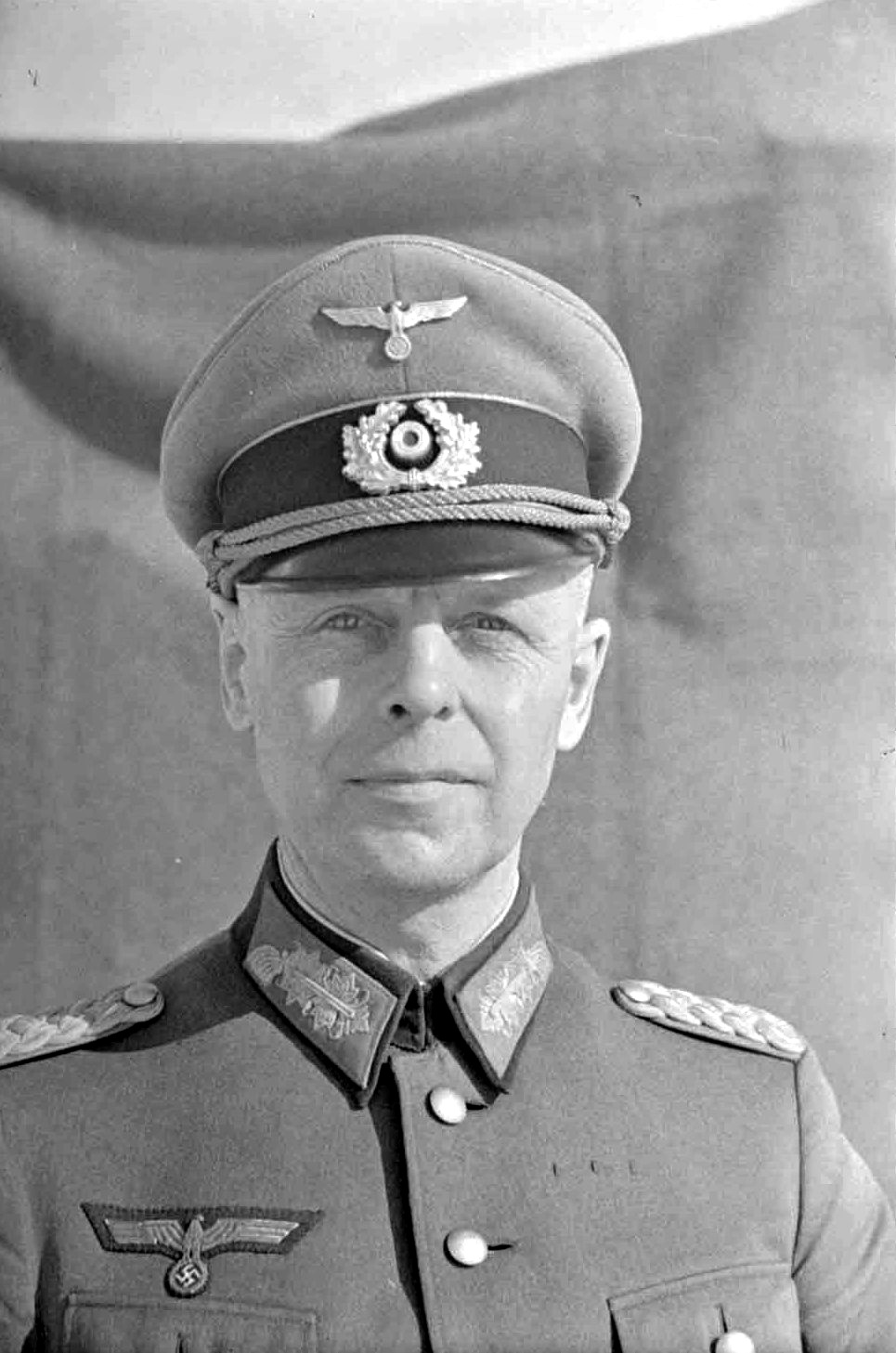
Generalmajor Rudolf Henrici
Born: 27 Jun 1892 in Soest
Died: 01 Aug 1971 in Wiesbaden
Promotions:
Fahnenjunker-Unteroffizier (12 Aug 1912); Fähnrich (19 Nov 1912); Leutnant (18 Aug 1913); Oberleutnant (05 Oct 1916); Hauptmann (01 Feb 1924); Major (01 Oct 1933); Oberstleutnant (01 Apr 1936); Oberst (01 Jan 1939); Generalmajor (01 Aug 1942)
Career:
Entered Army Service (11 Mar 1912)
Fahnenjunker in the 11th Field-Artillery-Regiment (11 Mar 1912-06 Sep 1914)
Detached to the War-School Danzig (19 Oct 1912-12 Jul 1913)
Transferred to the Light Machine-Cannon-Platoon of I. Battalion of the 11th Field-Artillery-Regiment (06 Sep 1914-20 Mar 1915)
Transferred to the 5th Battery of the 11th Field-Artillery-Regiment (20 Mar 1915-10 May 1915)
Adjutant & Court-Officer of II. Battalion of the 11th Field-Artillery-Regiment (10 May 1915-02 Feb 1917)
Temporary Leader of 5th Battery of the 11th Field-Artillery-Regiment (02 Feb 1917-15 Feb 1917)
Leader of 8th Battery of the 11th Field-Artillery-Regiment (15 Feb 1917-04 Mar 1917)
Leader of 5th Battery of the 11th Field-Artillery-Regiment (04 Mar 1917-10 May 1917)
Temporary Leader of 5th Battery of the 11th Field-Artillery-Regiment (10 May 1917-19 Jul 1917)
Detached to the Field Artillery Firing School Rembertow near Warsaw (18 May 1917-18 Jul 1917)
Temporary Leader of 3rd Battery of the 11th Field-Artillery-Regiment (19 Jul 1917-18 Aug 1917)
Adjutant with the Staff of Artillery-Commander Buzany (18 Aug 1917-12 Oct 1917)
Chief of the 7th Battery of the 11th Field-Artillery-Regiment (12 Oct 1917-29 Sep 1918)
Wounded, in Hospital (29 Sep 1918-13 Dec 1918)
Regiments-Adjutant of the 11th Field-Artillery-Regiment (13 Dec 1918-01 May 1919)
Regiments-Adjutant of the 11th Reichswehr-Artillery-Regiment (01 May 1919-01 Oct 1919)
Adjutant of II. Battalion of the 11th Reichswehr-Artillery-Regiment (01 Oct 1919-01 Oct 1920)
Transferred into the 2nd Battery of the 11th Reichswehr-Artillery-Regiment (01 Oct 1920-01 Jan 1921)
Transferred into the 1st Battery of the 5th Artillery-Regiment (01 Jan 1921-01 Apr 1924)
Hauptmann with the Staff of the 5th Artillery-Regiment (01 Apr 1924-01 Apr 1928)
Detached for Training on Radio Equipment with the 5th Signals-Battalion (27 Nov 1926-15 Dec 1926)
Detached to Firing Course for Artillery Officers in Ohrdruf (28 Feb 1927-09 Apr 1927)
Chief of 1st Battery of the 5th Artillery-Regiment (01 Apr 1928-01 Oct 1931)
Detached to Firing Course for Artillery Officers in Döberitz (25 Sep 1930-05 Nov 1930)
Transferred to the Regiment-Staff of the 5th Artillery-Regiment (01 Oct 1931-01 Oct 1934)
Detached to the Artillery-School (01 Jul 1934-15 Sep 1934)
Battalion-Commander in Artillery-Regiment Ludwigsbureg (01 Oct 1934-15 Oct 1935)
Commander of I. Battalion of the 25th Artillery-Regiment (15 Oct 1935-01 Jan 1938)
Transferred to the Staff of the Command-Office of Fortifications around Königsberg (01 Jan 1938-26 Aug 1939)
Commander of Special-Purpose-Artillery-Regiment-Staff 501 (26 Aug 1939-18 Jul 1941)
Artillery-Commander 140 (18 Jul 1941-30 Nov 1942)
Artillery-Commander 128 (30 Nov 1942-26 Jan 1943)
Führer-Reserve OKH (26 Jan 1943-19 Mar 1943)
Artillery-Commander 126 (19 Mar 1943-12 Aug 1944)
Higher Artillery Commander 302 (12 Aug 1944-08 Jan 1945)
Artillery-Commander 168 (08 Jan 1945-10 Jan 1945)
Artillery-Commander 145 (10 Jan 1945-09 May 1945)
In Yugoslav Captivity (09 May 1945-24 Mar 1953)
Released (24 Mar 1953)
Awards & Decorations:
Deutsches Kreuz in Gold (25 Aug 1944)
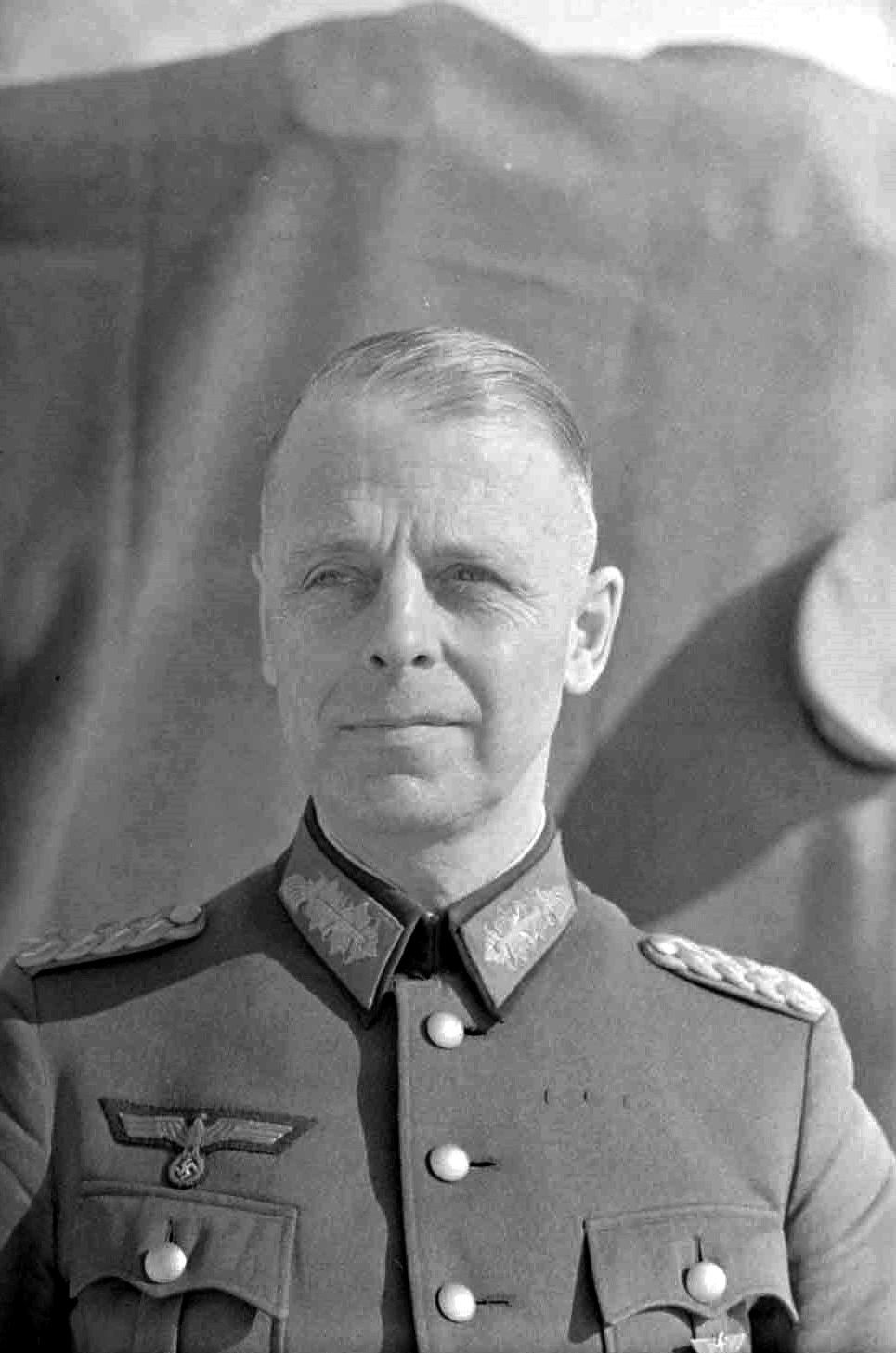


Source :
ECPAD photo collection
http://www.geocities.ws/orion47.geo/WEHRMACHT/HEER/Generalmajor/HENRICI_RUDOLF.html

Walter Fritz Rudolf Poppe
* 08.08.1892 Kassel
† 17.08.1968 (Bad Salzuflen-)Schötmar
20.01.1914 Leutnant (Pat. v. 22.06.1912)
00.00.19__ Oberleutnant mit RDA vom 18.08.1917 (20)
01.04.1925 Hauptmann (25)
01.05.1934 Major(20)
01.10.1936 Oberstleutnant (19)
01.06.1939 Oberst (16)
12.04.1942 Generalmajor mit RDA vom 01.04.1942 (75a)
21.01.1943 Generalleutnant mit RDA vom 01.01.1943 (58)
Eltern: Dr. med. Friedrich Wilhelm Poppe & Marie Helene geb. Tillemann
Kadettenausbildung
20.01.1914 Eintritt in das 4. Thüringische Infanterie-Regiment Nr. 72, Torgau
00.05.1915 Führer der 2. Kompanie des Infanterie-Regiments Nr. 72
Herbst 1916 krank ins Lazarett
16.01.1917 19.03.1917 Adjutant der 510. Infanterie-Brigade
20.04.1917 Führer der 1. Maschinengewehrkompanie des Reserve-Infanterie-Regiments 263
22.10.1917 kommandiert zur 79. Reserve-Infanterie-Brigade
26.09.1918 Adjutant des Reserve-Infanterie-Regiments 263
30.06.1919 Adjutant des Infanterie-Führers der Reichswehr-Brigade 10 , Hannover
01.10.1920 im 16. Infanterie-Regiment, Oldenburg
01.10.1921 kommandiert zum Stab der 6. Division, Münster, zur Führergehilfenausbildung (Etatstelle: Eskadronsoffizier im Reiter-Regiment 16, Kassel)
01.10.1922 im II. Bataillon des 16. Infanterie-Regiments, Hannover
01.10.1923 Führer des Nachrichten-Zuges des 16. Infanterie-Regiments, Hannover (Etatstelle: Chef der 4. Eskadron des 13. (Preußischen) Reiter-Regiments, Hannover)
01.04.1925 Chef der 8. (MG.) Kompanie des 16. Infanterie-Regiments, Hannover
01.10.1925 Regimentsadjutant des 16. Infanterie-Regiments, Oldenburg
01.10. 1929 Chef der 8. (MG.) Kompanie des 16. Infanterie-Regiments, Hannover
01.04.1934 Adjutant beim Infanterie-Führer III (Generalleutnant Hermann Hoth), Liegnitz (Legnica/Polen)
15.10.1935 Adjutant im Stab der 18. Infanterie-Division, Liegnitz, durch Umbenennung
01.10.1936 Kommandeur des II. Bataillons des Infanterie-Regiments 37, Osnabrück
06.10.1936 Kommandeur des I. Bataillons des Infanterie-Regiments 39, Düsseldorf, durch Umgliederung
01.05.1938 im Stab des Infanterie-Regiments 103, Saalfeld
15.10.1938 im Stab des Infanterie-Regiments 10, Dresden, zur Einarbeitung als Regimentskommandeur
26.08.1939 Kommandeur des Infanterie-Regiments 465
12.01.1942 mit der Führung der 255. Infanterie-Division beauftragt
01.04.1942 Kommandeur der 255. Infanterie-Division
00.10.1943 mit der Führung der 217. Infanterie-Division beauftragt
15.11.1943 Führerreserve
15.12.1943 Kommandeur der 364. Infanterie-Division
21.01.1944 Führerreserve
01.02.1944 Kommandeur der 77. Infanterie-Division
25.04.1944 Führerreserve
05.07.1944 Kommandeur der 59. Infanterie-Division (bodenständig)
00.02.1945 Lazarett; Führerreserve
28.04.1945 - 03.05.1945 Kommandeur der Divisionsgruppe 467
Nach Auflösung der Division Nr. 407 am 15.09.1944 werden dem Stab der Division Nr. 467 in Augsburg Grenadier-, Gebirgs- und Artillerie-Ersatz-und Ausbildungs-Regimenter unterstellt. Am 28.04.1945 wird die Division z.b.V. 616 (unter Gen.Maj. Raessler, der in die Fü.Res. HGr G geht) in die Divisionsgruppe 467 eingegliedert
03.05.1945 Gefangennahme bei Aidenbach (westlich Passau im “Klosterwinkel”) durch die US-army
25.06.1947 Entlassung
00.00.1954 verfasst die “Kurze Geschichte der 77. Infanterie-Division”; heute im Bestand des BArch/MArch in Freiburg
Awards and Decorations:
30.05.1942 Deutsches Kreuz in Gold
08.11.1943 Nennung im Wehrmachtsbericht
Spange zum EK I
Verwundetenabzeichen in Schwarz
Hamburgisches Hanseatenkreuz
RK 2. Klasse des Herzogl. Sachsen-Ernestinischen Hausordens mit Schwertern
RK des Königl. Bulgar. Militar-Verdienstordens
Verheiratet seit 19.12.1917 mit Else geb. Matthias; 2 Söhne, 1 als Leutnant am 22.07.1944 in Raum Brody gefallen
Source :
http://alifrafikkhan.blogspot.com/2010/09/daftar-generalleutnant-heer-letnan.html
https://forum.axishistory.com/viewtopic.php?f=5&t=76765

Generalmajor Karl Jörling
Born: 24 Mar 1879 in Gnesen, West Prussia (Westpreußen)
Died: 11 Jan 1945 in Schwäbisch-Gmünd
Promotions:
Fähnrich (16 Dec 1899); Leutnant (18 Oct 1900); Oberleutnant (25 Feb 1910); Hauptmann (19 Aug 1914); Major (01 Jul 1923); Charakter als Oberstleutnant (31 Jan 1929); Oberstleutnant (01 Oct 1933); Oberst (01 Oct 1935); Generalmajor (01 Feb 1942)
Career:
Entered Army Service (20 May 1899)
Fahnenjunker in the 123rd Grenadier-Regiment (20 May 1899-09 Aug 1914)
Adjutant of I. Battalion of the 123rd Grenadier-Regiment (01 Oct 1906-30 Sep 1909)
Regiments-Adjutant of the 124th Landwehr-Infantry-Regiment (09 Aug 1914-26 Sep 1915)
Detached to the General-Command of XVIII. Reserve-Corps (26 Sep 1915-27 Sep 1915)
Adjutant of Brigade Präfke (27 Sep 1915-06 Nov 1915)
Leader of II. Battalion of the 123rd Landwehr-Infantry-Regiment (06 Nov 1915-15 Dec 1915)
Leader of III. Battalion of the 124th Landwehr-Infantry-Regiment (23 Jul 1916-16 Sep 1916)
Commander of III. Battalion of the 124th Landwehr-Infantry-Regiment (16 Sep 1916-12 Jul 1917)
Battalion-Leader in the 476th Infantry-Regiment (12 Jul 1917-22 Oct 1918)
Wounded, in French Captivity (22 Oct 1918-16 Feb 1920)
Released (16 Feb 1920)
Detached to the 123rd Grenadier-Regiment (17 Feb 1920-04 Mar 1920)
With the Staff of II. Battalion of the 26th Rifle-Regiment (04 Mar 1920-27 Jun 1920)
Company-Leader in the 26th Rifle-Regiment (27 Jun 1920-01 Oct 1920)
Company-Chief in the 13th Infantry-Regiment (01 Oct 1920-01 Aug 1922)
Transferred into the 14th Infantry-Regiment (01 Aug 1922-01 Oct 1923)
With the Staff of the Command-Office Stettin (01 Oct 1923-01 Jan 1927)
Commander of III. Battalion of the 14th Infantry-Regiment (01 Jan 1927-31 Jan 1929)
Retired (31 Jan 1929)
Employed by the Army (01 Feb 1929)
Landwehr-Officer (01 Feb 1929-01 Oct 1933)
Entered Army Service as a Territorial-Officer (01 Oct 1933); Supplemental-Officer (05 Mar 1935); Active-Officer (01 Jun 1941)
Commander of Military-District-Command Schwäbisch-Gmünd (01 Oct 1933-10 Aug 1940)
Field-Commandant 812 (10 Aug 1940-1941)
Field-Commandant 725 (1941-01 May 1942)
Führer-Reserve OKH (01 May 1942-30 Sep 1942)
Retired (30 Sep 1942)
Awards & Decorations:
1914 Eisernen Kreuzes II. und I.Klasse


Source :
Klaus Thiel photo collection
http://www.oocities.org/~orion47/WEHRMACHT/HEER/Generalmajor2/JOERLING_KARL.html
